Choosing the right ute canopy comes down to more than just looks, material plays a major role in performance. When comparing fibreglass canopy vs aluminium, the differences show up in insulation, durability, security, and overall finish. Whether you're fitting out a Ford Ranger canopy or Volkswagen Amarok canopy, here’s what actually matters.
Temperature, Insulation & Condensation
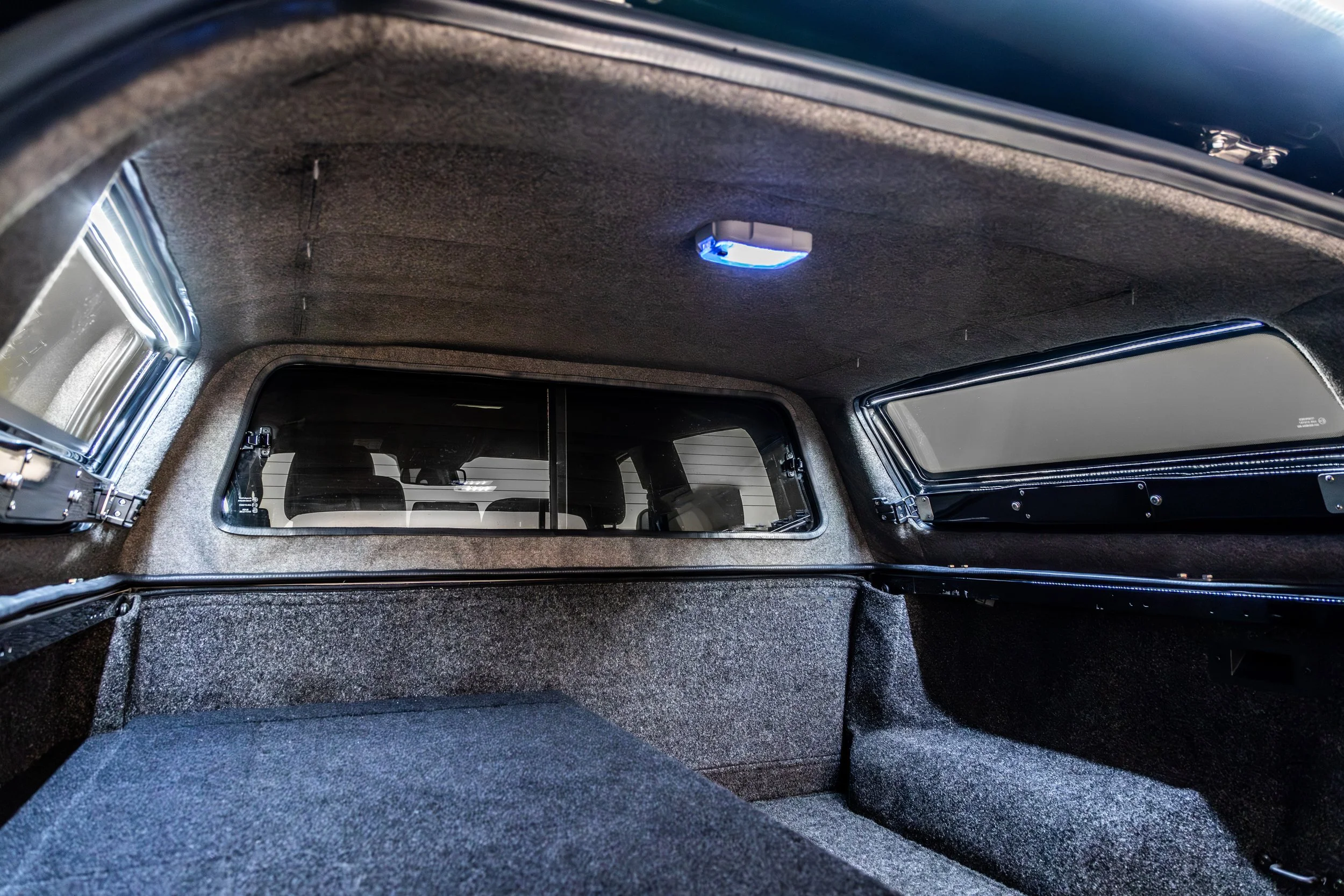
Fibreglass has a clear advantage when it comes to insulation. Its composite construction, especially paired with an internal lining, helps regulate internal temperatures, keeping things cooler in summer and warmer in winter. This stability also reduces condensation, meaning less moisture buildup and clearer windows. For tools, camping gear, or electronics, that creates a noticeably drier, more controlled environment.
Aluminium, on the other hand, is highly conductive. It quickly absorbs external heat and cold, causing the interior to fluctuate rapidly. This makes aluminium canopies more prone to condensation, especially when there’s a temperature difference between inside and outside. While linings can help, the material itself doesn’t insulate.
Security & Strength
A well-built fibreglass canopy is typically a solid, moulded shell with reinforced mounting points and framed windows. This makes it rigid and difficult to tamper with, particularly when paired with central locking.
Aluminium canopies are known for strength, especially in heavy-duty setups. However, many tub top designs use thinner sheet metal to reduce weight, which can lead to flex or denting under pressure. In both cases, security depends heavily on build quality and locking systems.
Load Capacity
Load ratings matter if you're running roof racks or a rooftop tent. Quality fibreglass canopies often achieve dynamic ratings around 100kg and static loads up to 400kg, thanks to reinforced internal structures.
Aluminium canopies can also offer strong load capacity, but this varies widely depending on design. In tub top configurations, the difference often comes down to how well the canopy is engineered rather than the material alone.
Durability & Finish
Both materials resist corrosion, making them suitable for Australian conditions. Fibreglass won’t rust and maintains its shape well over time, with minor damage often repairable.
Aluminium is also corrosion-resistant but dents more easily, and repairs can be more difficult if panels are bent.
From a visual standpoint, fibreglass delivers a more refined result. A colour-coded Ford Ranger canopy or Volkswagen Amarok canopy made from fibreglass follows vehicle body lines for a seamless, factory-style finish. Aluminium tends to look more industrial, with flat panels and visible joins.
The Bottom Line
If you're chasing the best canopy for overall performance, fibreglass offers a more balanced solution. It delivers better insulation, a cleaner finish, and strong all-round capability.
Aluminium still has its place, particularly for trade-focused setups where simplicity and weight matter. But for most drivers wanting comfort, security, and a canopy that integrates with their vehicle, fibreglass stands out as the smarter long-term choice.
